TREES, of the Universidad de los Andes, and the Program for the Economic Analysis of Mexico (PRAEM), of El Colegio de México, finance research at each of the universities to which they belong. This research is aimed at studying the causes and consequences of inequalities in Latin America. In order to promote the discussion of questions and share research advances, both initiatives organized four virtual Brown Bag Seminars that promote interaction between researchers from both institutions and countries.
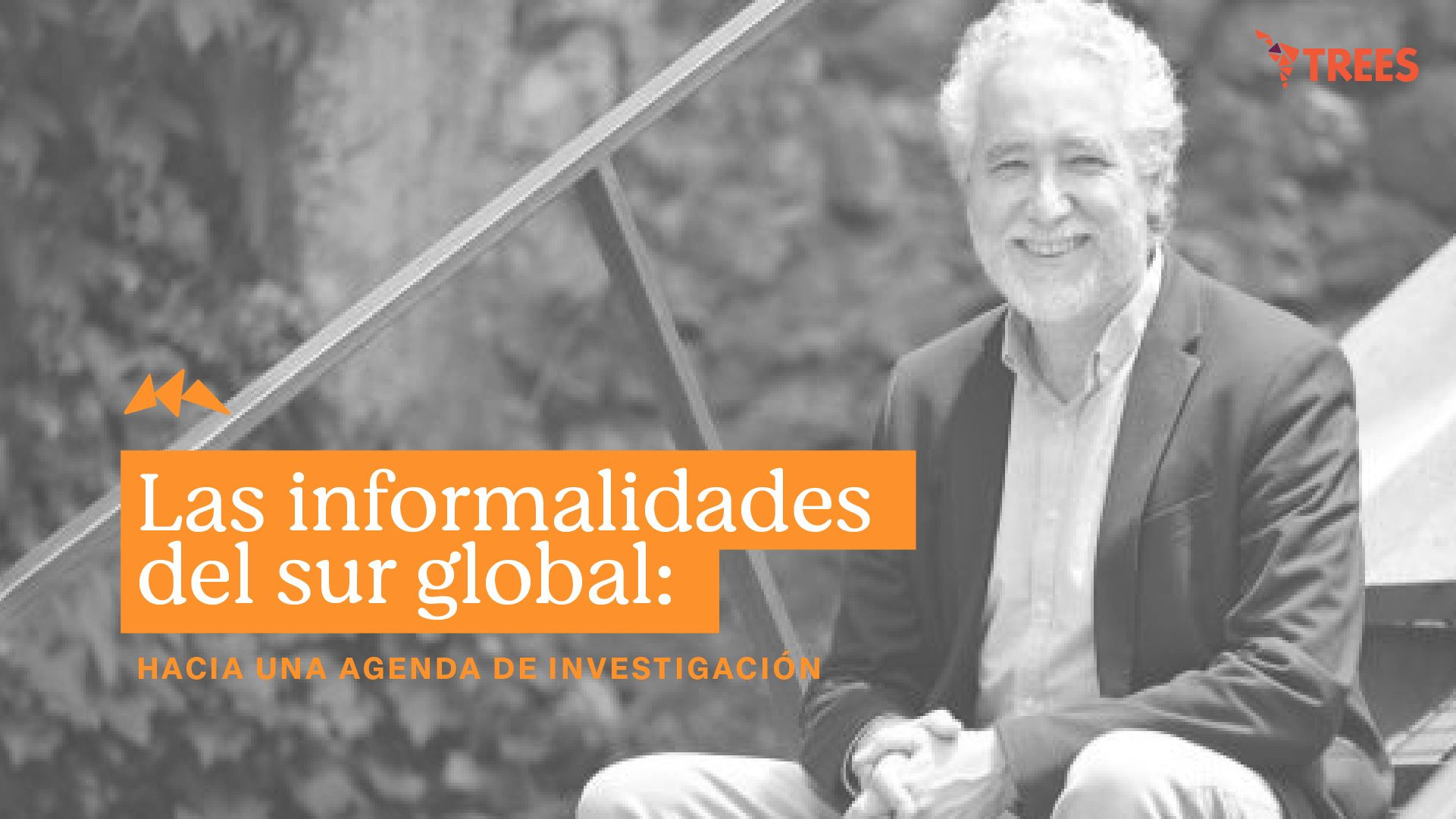
The first meeting, on Friday, August 25, was led by Juan Camilo Cárdenas and César Mantilla. During this conversation, entitled “Informalities in the Global South: Towards a Research Agenda,” Cárdenas and Mantilla explored formality and informality within a range of labor relations. They also identified the costs and benefits of having formal and informal labor relations and outlined the methodological challenges of their research.
The second seminar, on Friday, September 29, was entitled: “The Impact of Transportation Platforms on the Labor Market: Evidence for Mexico”. Laura Juarez, PRAEM coordinator, spoke about her research exploring the rise of digital transportation platform labor in Latin America. Juarez considers it relevant to understand the benefits it can bring to workers, such as flexibility, along with the possible consequences, such as variable income or lack of social benefits. For this, he presented evidence from his ongoing research on the gradual entry of Uber in Mexican cities and its impact on people's labor variables.
For the third meeting, on Friday, October 27, Raymundo Campos and Aurora Ramírez, researchers from the Center for Economic Studies at El Colegio de México, led the session entitled: “Redistribution: how do we understand inequality for a new social pact?”.
If you are interested in the research being conducted by TREES and PRAEM and would like to participate in the Brown Bag Seminars next semester, 2024-I, subscribe to the TREES newsletter to receive invitations to these spaces.
TREES and the Program for the Economic Analysis of Mexico (PRAEM) of El Colegio de México organized three Brown Bag Seminars during the second half of 2023, to share agendas and progress of the research they are funding. As part of the Research component of TREES, the Brown Bag Seminars are intended to promote an interdisciplinary agenda, with different approaches, to explore the causes and consequences of inequalities in the region.
The first Brown Bag Seminar entitled “The Informalities of the Global South: Towards a Research Agenda” was held on Friday, August 25 through the Zoom platform. Juan Camilo Cárdenas, Professor at the Faculty of Economics of the Universidad de los Andes and responsible for the Outreach component of TREES, and César Mantilla, Professor at the Faculty of Economics of the Universidad del Rosario, discussed the following topics how to address questions of informality in the global south.
His seminar began with an introduction on informality, a structural and historical issue of countries in the global south. Cardenas commented on the possibility of approaching this phenomenon from new perspectives such as behavioral and experimental economics, as well as field observation. He also explained that approaching informality from a new perspective implies proposing new definitions and thinking about the possibility of the existence of virtuous informality, with benefits for society.
The authors argued that labor relations incorporate more economic agents and elements than is usually thought. The interactions between owners, management and workers include elements that determine whether the relationship is formal or informal. However, The researchers proposed new components that move away from the formal/informal dichotomy, such as respect, dignified treatment and trust, among others. These components are fundamental, but are not part of a formal contract. In addition, they pointed out that formal and informal arrangements can coexist within a single relationship, separating these concepts from legality. Adding new edges to relationships makes it possible to erase the dichotomous division between formality and informality and begin to think of them within a range of relationships.
In the social exchange between two people, there are different factors that determine whether the interaction is virtuous or detrimental. Mantilla identified three trade-offs, i.e., the trade-offs that occur between costs and benefits, which are present when the labor relationship is more formal or more informal. The first has to do with compliance rules. On one side is the legal contract and formal rules. On the other, trust. A formal employment relationship is governed by the contract, while an informal one relies on the trust between the two parties. The costs of these extremes are: greater exclusion at the formal end and the risk of disproportionate or illegal mechanisms when trust fails and the agreed arrangement is not complied with.
The second trade-off has to do with the reaction to uncertainty. At one end of the spectrum are social insurance mechanisms to protect the people who are part of the formal agreement in the face of any uncertainty. Rigidity, however, can generate costs to the relationship. At the other extreme is greater flexibility in the face of uncertainty, but at the cost of not having protection in exceptional circumstances.
The last trade-off is related to the asymmetry of how information is acquired for the employment relationship. On the one hand, information is acquired through formal documents that function as selection mechanisms for choosing with whom to create a relationship. The cost of this extreme is the exclusion of those people who have not had access to formal mechanisms to confirm their value. The other extreme has a more horizontal communication mechanism, through hearsay and a “voice to voice” of personal reputation. The disadvantage on this side of the spectrum is the possibility of misinformation.
Identify these trade-offs led Cardenas and Mantilla to propose that informality persists because, despite certain sacrifices, it also brings benefits to those who participate in these arrangements. For example, informality may be the best cradle for innovation because it is not constrained by the rigidity of formal arrangements.
The researchers posed two methodological challenges. First, how to account for the creation or destruction of value derived from informal and formal labor relations? This value has to do both with losses or gains in economic efficiency, but also in fairness. Secondly, how to define and measure informality? This element brings the challenge of how to generate experiments with informal workers if they prefer not to become visible to the State.
Cardenas and Mantilla proposed using the lens of behavioral economics to approach informality and explore what tools and prior knowledge are applicable in this research. Their agenda, then, consists of four elements. First, to improve the taxonomy with which we talk about labor relations and interactions between economic agents. Second, to stop viewing formality and informality in a divided manner. Thirdly, to explore how, through the trade-offs, Informality can generate economic value and justice. Finally, expand approaches to political economy and think about elements such as dignity, power, abuse and care.
The session ended with a space for questions and interventions from the audience. Participants from Uniandes and COLMEX shared their own perspectives on what they have learned from informality and added factors to consider in research. Among the comments, the challenges of taxonomic creation and moving away from divisive concepts were mentioned. The inclusion of other actors in the picture such as the State was also proposed, along with an assessment of their power and scope. The researchers were grateful for the interventions and commented on the importance of having other perspectives to enrich their work.
Access the full recording of the first Brown Bag Seminar here:
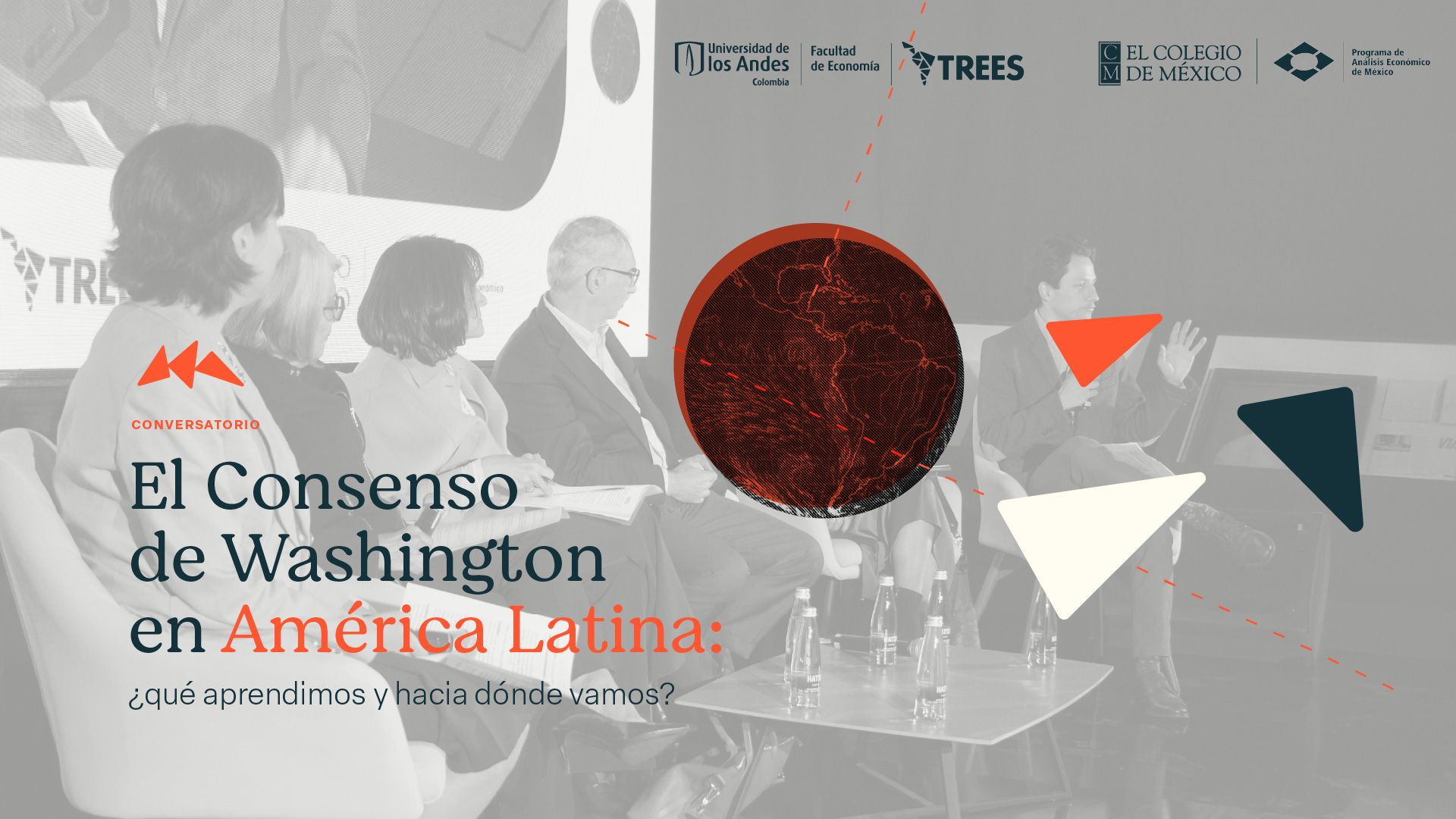
On November 15, we held the discussion “The Washington Consensus in Latin America: what did we learn and where are we going? It was held at the Universidad de los Andes, and was the first face-to-face activity of the alliance between TREES and the PRAEM (Program of Economic Analysis of Mexico) of El Colegio de México.
The purpose of the event was to reflect on the scope, effects and limitations for Latin America of the economic liberalization policies established 30 years ago in the Washington Consensus. The reforms that were part of this Consensus focused on promoting trade freedom and deregulation, thus limiting the incidence of the State in the market.
Despite the fact that these policies have led to macroeconomic stability in some countries of the continent, the challenges of inclusion, sustainability and increasing inequalities persist in Latin American countries, which has led to social unrest and significant political changes in some countries of the region. Achieving a deep and plural reflection on the decisions made in recent decades is essential to influence the creation of economic, political and social alternatives that will lead to attacking these persistent problems.
To achieve this goal, the discussion brought together four experts: Cecilia López, former Minister of State of Colombia, an expert on the country's inclusive economic and social policies. Lorenza Martínez, CEO of Actinver Bank, who has extensive experience in public and private financial institutions. Olga Lucía Acosta, member of the Board of Directors of Banco de la República de Colombia and expert in monetary and financial policies. Santiago Levy, head of the Employment Mission in Colombia, recognized for his contributions to the fight against poverty.
The conversation included questions to reflect on the achievements and legacy of the Washington Consensus in relation to institution building, reforms and public policies. It also explored what illusions have been left unfulfilled, along with the factors that possibly interfered with their realization. In addition, it analyzed the ways in which the paradigm proposed in the 1990s neglected factors of social and political reality.
On the other hand, more specific ideas were included regarding the weaknesses of current social policy, delayed objectives to reduce inequalities, climate change, mitigation policies, the challenges of central banks in Latin America, the change in the relationship between the public and private sectors to create economic alternatives and the most important lessons learned in the fight against poverty.
If you missed the conversation, you can watch the live webcast here:
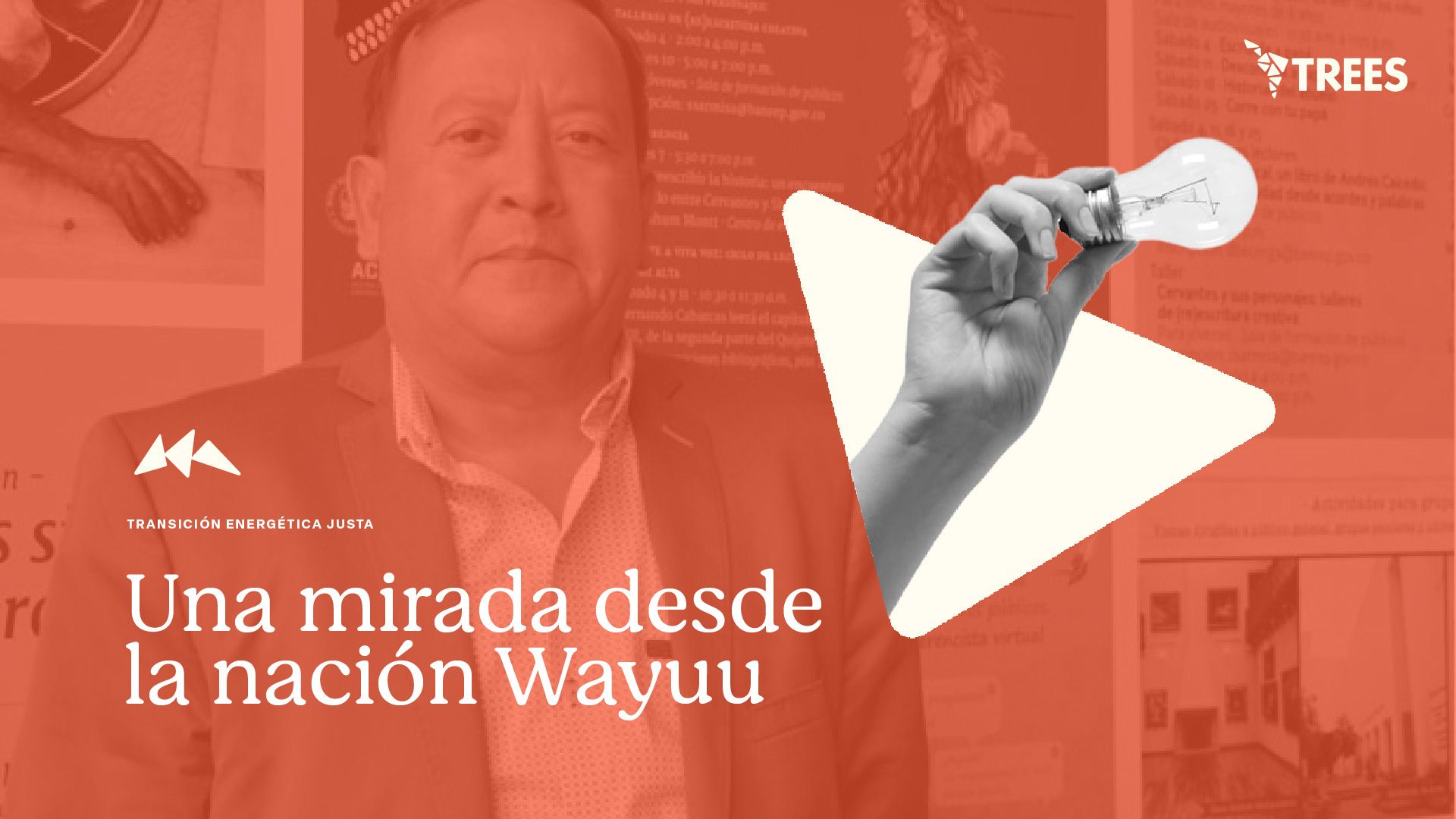
A key element of the TREES Research Lab proposal is to give students the opportunity to learn about new voices and perspectives that broaden their vision of inequalities. This semester, with the Just Energy Transition as a central theme, the TREES Research Lab invites to the discussion “Just Energy Transition: a view from the Wayuu nation”.
Andrés Álvarez, professor at the Faculty of Economics at Uniandes and director of the GIHPTE seedbed, points out the importance of thinking about the energy transition from particular social contexts, such as the case of the Wayuu indigenous population in La Guajira: “they are populations that will be directly affected by this transition problem”. From his seedbed, they have proposed the need to broaden their vision to new cultural contexts and think about the justice component not only from the “knowledge of economists or Western philosophy, but also from other points of view”.
For this reason, the Research Lab will have the presence of Weildler Guerra, PhD in Anthropology from the Universidad de los Andes and former director of the Observatory of the Colombian Caribbean, to share with students the cultural perspective of his Wayuu people about the changes brought by the energy transition. The meeting will take place next Monday, October 30, at 5:00 p.m., in room RGD 112-113 of the Universidad de los Andes.
About Weildler Guerra: Exemplary Colombian Award (2021). National Culture Award in the area of Anthropology. Member of the 2019 International Mission of Wise Men of the Colombian Academy of History and of the Honorary Commission of the Bicentennial.
A just transition is at the center of Colombia's energy plans, but to what extent does it reflect indigenous visions of energy justice? Download Wayuu Winds, recently published by Weildler Guerra.